
Wearing a paintball helmet, neck guard, and police belt, I found myself knocking on the door of room 258 at the Alaska State Trooper Academy in Sitka, Alaska. I was carrying out a simulation after thirty minutes of training on how and when to use a pistol and taser from a police belt.
Before walking to the door, I was told I was responding to a call for a person experiencing a mental health crisis. I asked what I was allowed to do. Sergeant Boyd Branch, the deputy commander at the academy, told me to use my training. My heart was racing and I was extremely nervous, even though I knew I wasn’t in any real danger.
I knocked on the door and announced that I was the police. The door flew open and next thing I knew I was being attacked by a man bigger and stronger than me who looked like a character out of a horror movie.
Terrified, I ran backwards as fast as I could and tried furiously to get my training gun out of my holster. The whole simulation lasted maybe five seconds. Only after we stopped and I composed myself did I see that the man who had attacked me was holding a huge fake knife with an electric shocking tip. I hadn’t even noticed it during the attack.
That experience was the culmination of two days at the Alaska State Trooper Academy in Sitka. Two months prior, I had Public Safety Deputy Commissioner Leon Morgan on my podcast. I asked him if I could ever attend the police academy to experience it. He told me he would look into it.
The Anchorage Fire Department does a Fire Ops event every year where they invite lawmakers and members of the media to experience how firefighters work and train. I attended that in 2016. But everyone loves firefighters. Cops, not so much. I wasn’t confident they would approve my visit.
A few days later I got a call from Leon. To my surprise, he told me I was invited to attend the academy. He told me Austin McDaniel, the communications director for the Alaska State Troopers, would reach out to make the arrangements.
There are two academies each year, one starting in January and the other in July. Recruits must complete a rigorous 17-week training course while living at the academy. Not all of the recruits at these trainings join the troopers. Unlike the Anchorage Police Department and one at the University of Alaska Fairbanks, other Alaska cities do not have a police academy. So many, including Palmer, Wasilla, Fairbanks, and Juneau, send their future officers to the academy in Sitka.
When Austin reached out, we decided I would attend for two days at the end of March. This would be the halfway point of the academy that started in January. Recruits would be in a good routine by that point and some cool stuff would be happening, so it was the perfect time to attend.
I told Leon I wanted the full experience and emphasized I really wanted to be tased. Not only would it make for an epic video, I was genuinely curios how it feels. I know all the recruits have to experience it. Leon was apprehensive, and it was ultimately not approved, but I am keeping my hopes up for the future!
As the trip approached I was a bit surprised that Leon or Austin had not stipulated restrictions on what I would write or film. Not that I would necessarily agree, but I assumed that would be a condition of my visit.
When I called Leon to talk about it, he told me I was free to write and record whatever I want. Their only request was that I don’t quote recruits who ask questions during training, to prevent them from being uncomfortable asking questions. That was fair. Leon reiterated that he wanted me to experience what happens at the academy and to write genuinely about it.
A week before my trip, I got an email from Austin. He detailed what I would be doing for the two days.
We are excited to host you at the Alaska Law Enforcement Training Academy in Sitka on March 30–31. DPS will provide lodging, meals, and transportation to and from the airport. We have you scheduled to arrive on the morning flight on March 30 and depart on the evening flight on March 31.
Unfortunately, we will not be able to facilitate the Taser exposure due to a variety of practical constraints and liability concerns. During the two-day visit, you will participate in control tactics, patrol rifle training, physical training (PT), and virtual training scenarios. Expect to spend one day inside in the academy building working on control tactics and virtual scenarios, and one day at our outdoor shooting range.
Please bring appropriate clothing for physical training on the morning of March 31, as well as for control tactics scenarios. For the patrol rifle training, bring clothing suitable for spending several hours outdoors in Sitka conditions. We ask that clothing not display political or inappropriate imagery or language. Please also bring any necessary medications or personal items, as we are unlikely to leave the academy or range during your visit. As this is a State of Alaska facility, drugs (including marijuana) and alcohol are prohibited on campus.
You are welcome to bring video recording equipment such as a GoPro or smartphone. Statements made by other recruits are strictly off the record; however, training activities may be recorded and shared. I will be present throughout the training, so please feel free to check with me if you have any questions about what is or is not on the record.
Please plan for an early start on March 31, as PT begins at 5:00 a.m.
It all started to feel real when I read the last sentence. I pictured something out of Full Metal Jacket. If you know me, you know I am not an early riser and when I do go to the gym, it’s in the late afternoon or evening.
I left Juneau early Monday morning excited and a bit nervous. Austin greeted me when I arrived. After a short drive through Sitka, we reached the academy. I was greeted by Lieutenant Grant Miller, academy commander. Miller is in his late 40s but is very fit and looks younger, with tattoos covering both arms. He looks like a cop but if you saw him in civilian clothes on the street or in a bar, you might think otherwise.

Miller has a serious professionalism but is also friendly. He gave me a full tour of academy including the dorm style rooms where recruits live (4 to a room), cleaning and laundry facilities, a large training room with a padded floor, a fully equipped gym, and a classroom. It was quite a facility.
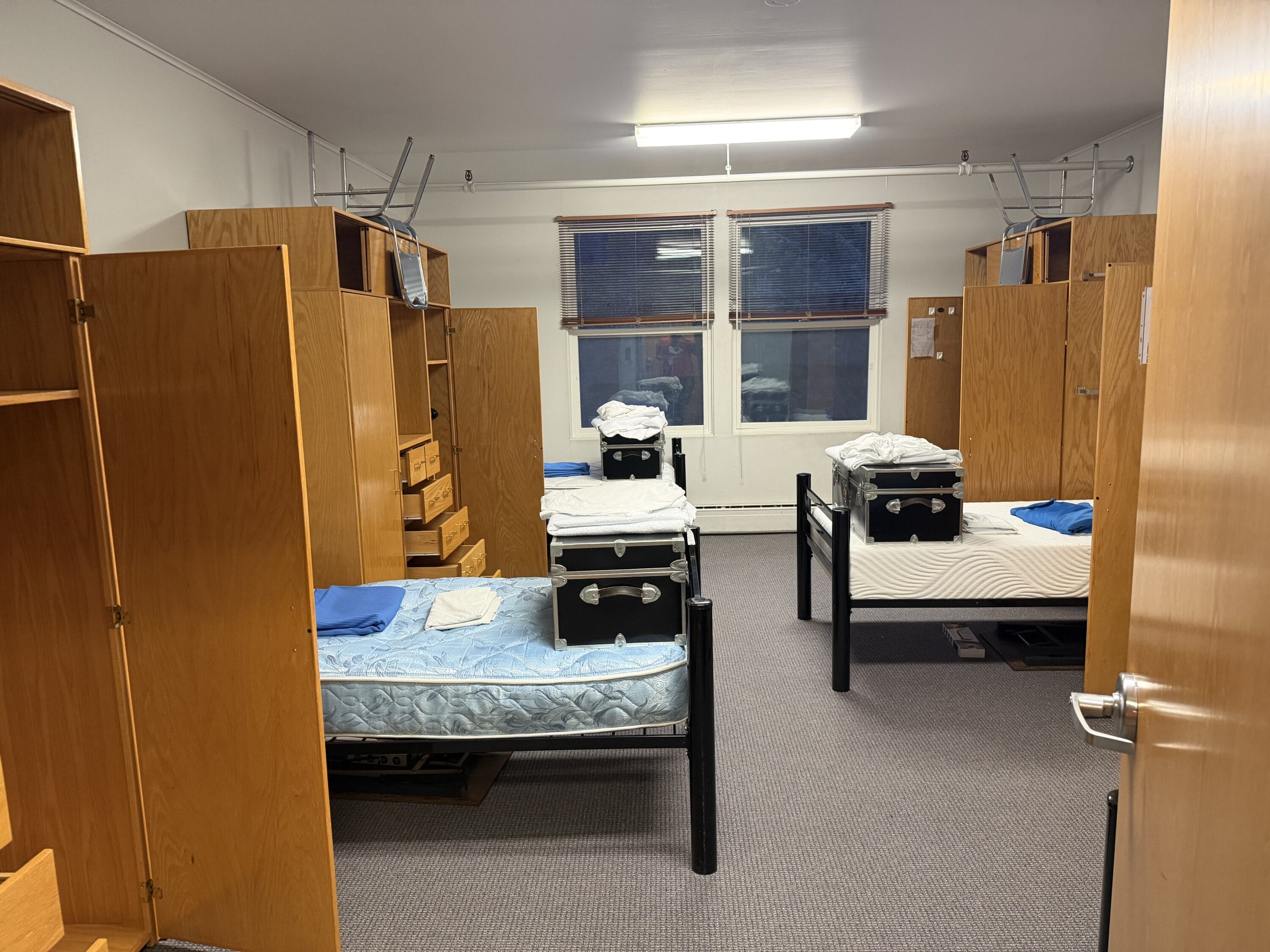
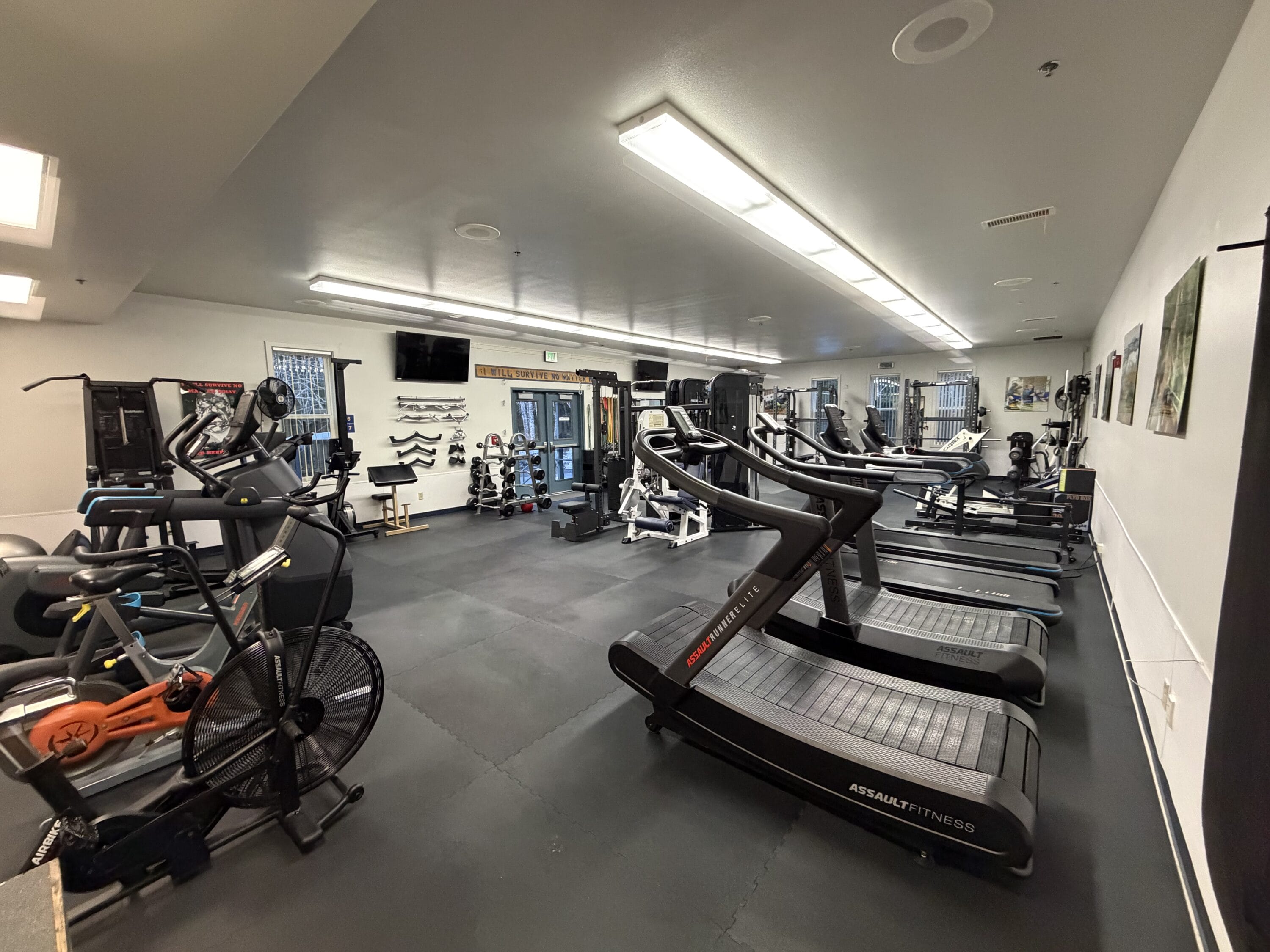
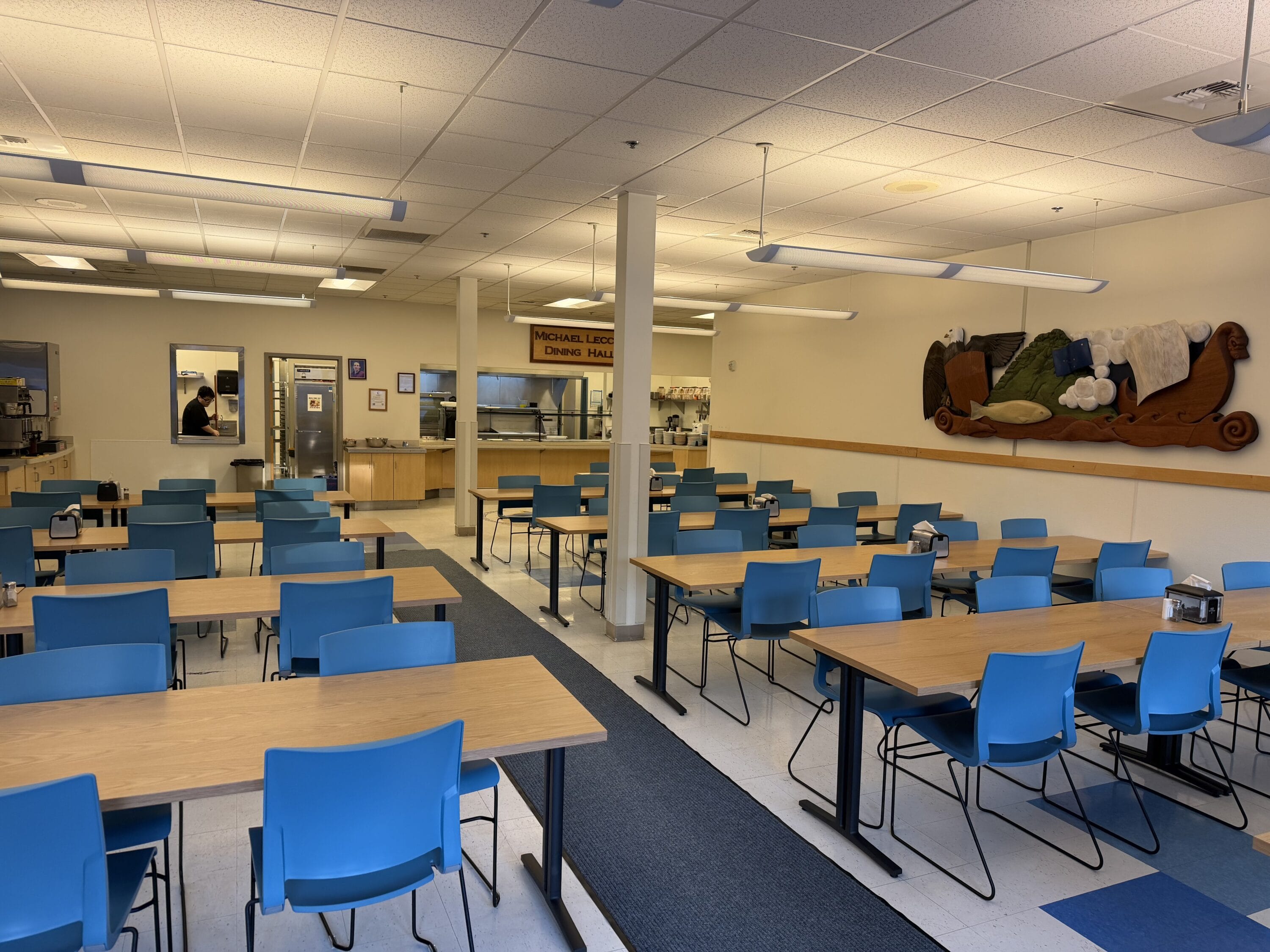
After the tour, I was shown my room. It had four small beds and a bathroom with two showers, but I had the room to myself. I was excited to see my name on the door. I posted a photo on Landmine social media to tease my visit, which I had only told a few people about.
In what I later learned was my big mistake of the trip, the photo included the door code of the building. I was quickly skewered with comments like “Failing OPSEC on day 1 is certainly a choice” and “Cue the office-wide email announcing the new door code.” No one said anything to me but I later learned they in fact did change the door code soon after my post. Sorry about the one, troopers!

Next was lunch with the recruits. Austin told me everyone had been briefed on what I would be doing, but I was still apprehensive about how I would be received by the staff and recruits. Leon told me I was the first member of the media to do an immersive experience at the academy, so none of us really knew what to expect.
Austin and I walked into the cafeteria. One thing I quickly found out was how good the food is. Think North Slope but a smaller cafeteria and no ice cream or sweets.
After I got lunch, I sat down with some of the recruits. Most of the recruits are in their early to mid-20s, but a few were in their 30s. They were all very respectful, ending every answer with sir. Some were from Alaska and some from the Lower 48.
Of the eighteen recruits in this academy, around half are going into the troopers and the other half to local police departments. Fifteen were men and three were women. They were split into two squads for the academy: alpha and bravo. This is done partly to aid group management, but also to instill a sense of competition among the recruits.
After lunch it was time for some control tactics in the gym. The recruits are taught defensive tactics so they can respond to people who attack them. A lot of the training is similar to Brazilian jiu-jitsu. The instructors teach them a variety of moves to stop an attack, escape, and subdue an attacker. The recruits then practice with one another with varying degrees of speed.

I also got to meet and chat with many of the instructors. Corporal Andrew Valcourt started showing me some of the training the recruits go through. He taught me various ways to use your arms and legs to get the upper hand on an attacker. Everything started on the ground. Even at 25% it was easy to get winded, but the effectiveness of the techniques was obvious immediately.
I also quickly learned that Valcourt must really enjoy working out. One of the techniques requires you to move your hand from the wrist of the attacker up to the bicep to control the person’s arm. I could barely get my hand halfway around his massive bicep and tricep.
I posted some photos of me and Valcourt after I was done with the training. I was expecting a little bit of trolling, and sure enough there was a bit of that. But I did not expect the reaction to Andy’s mustache. Some of the comments included “bro needs a permit for that mustache. Is it real??” and “That’s a tactical mustache if I’ve ever seen one.” I also had a few female friends and a prominent gay male public official inquire about his relationship status and phone number.
Fun fact: Alaska State Troopers are not allowed to have beards. It’s in statute!
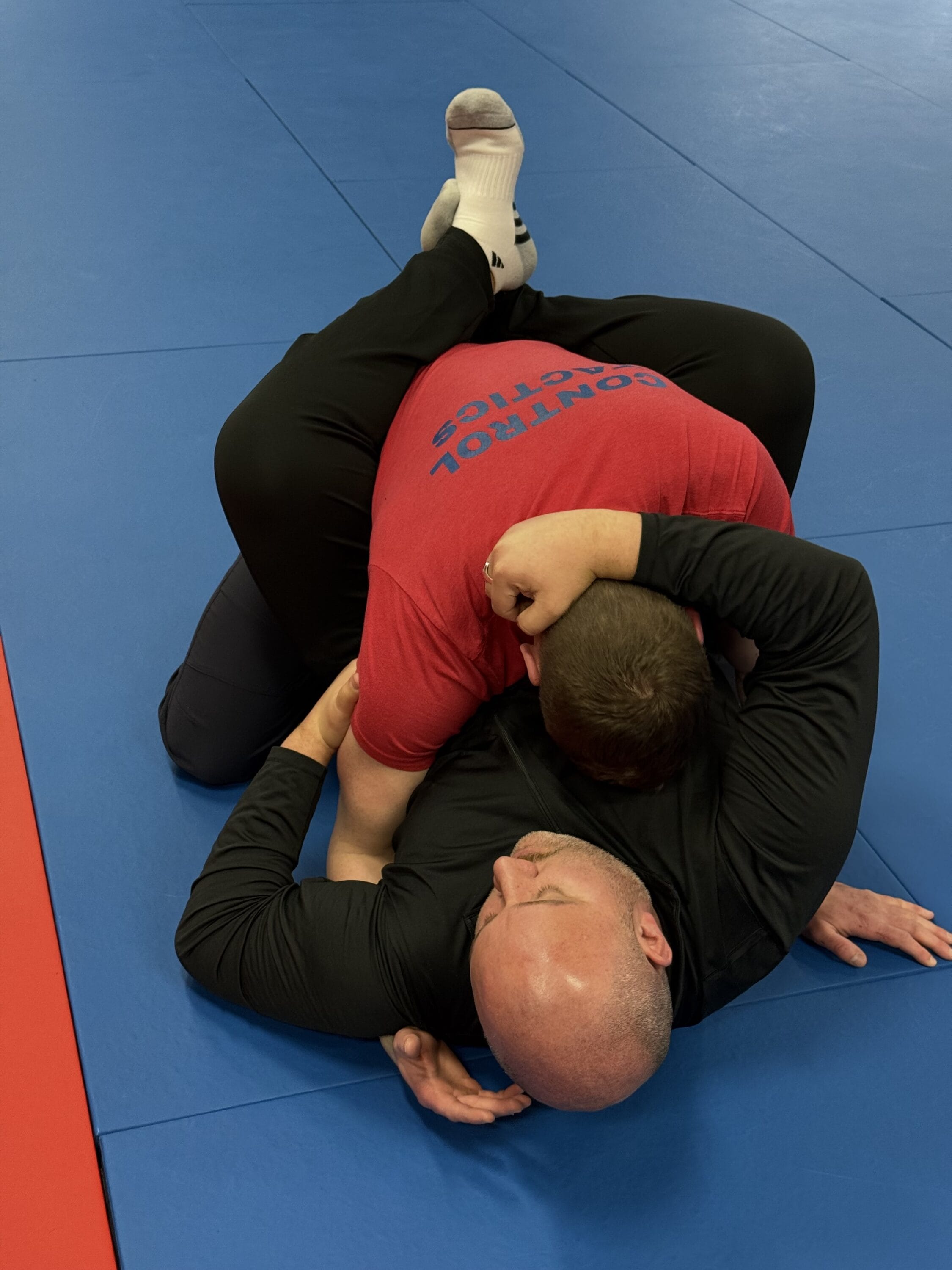
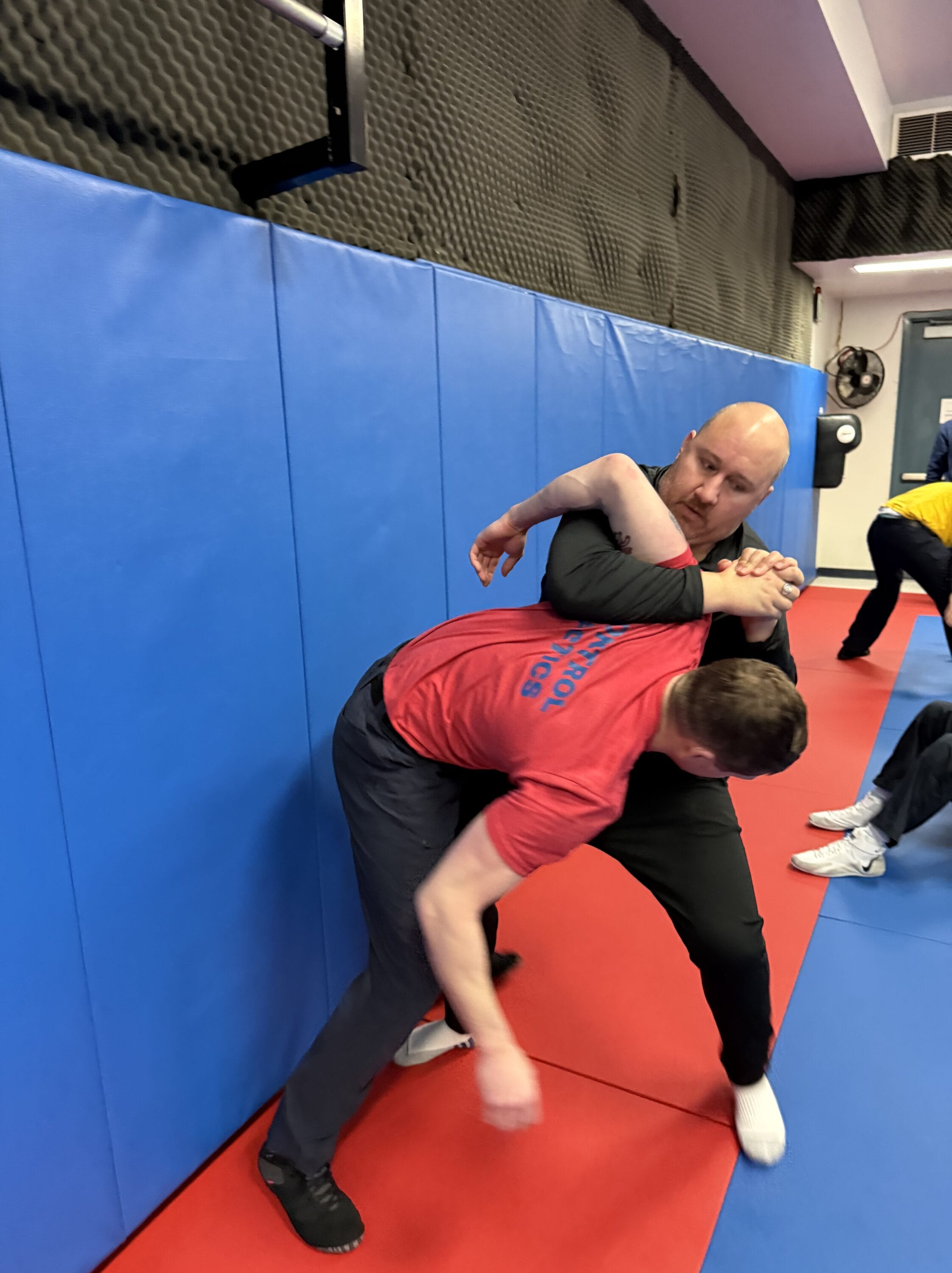
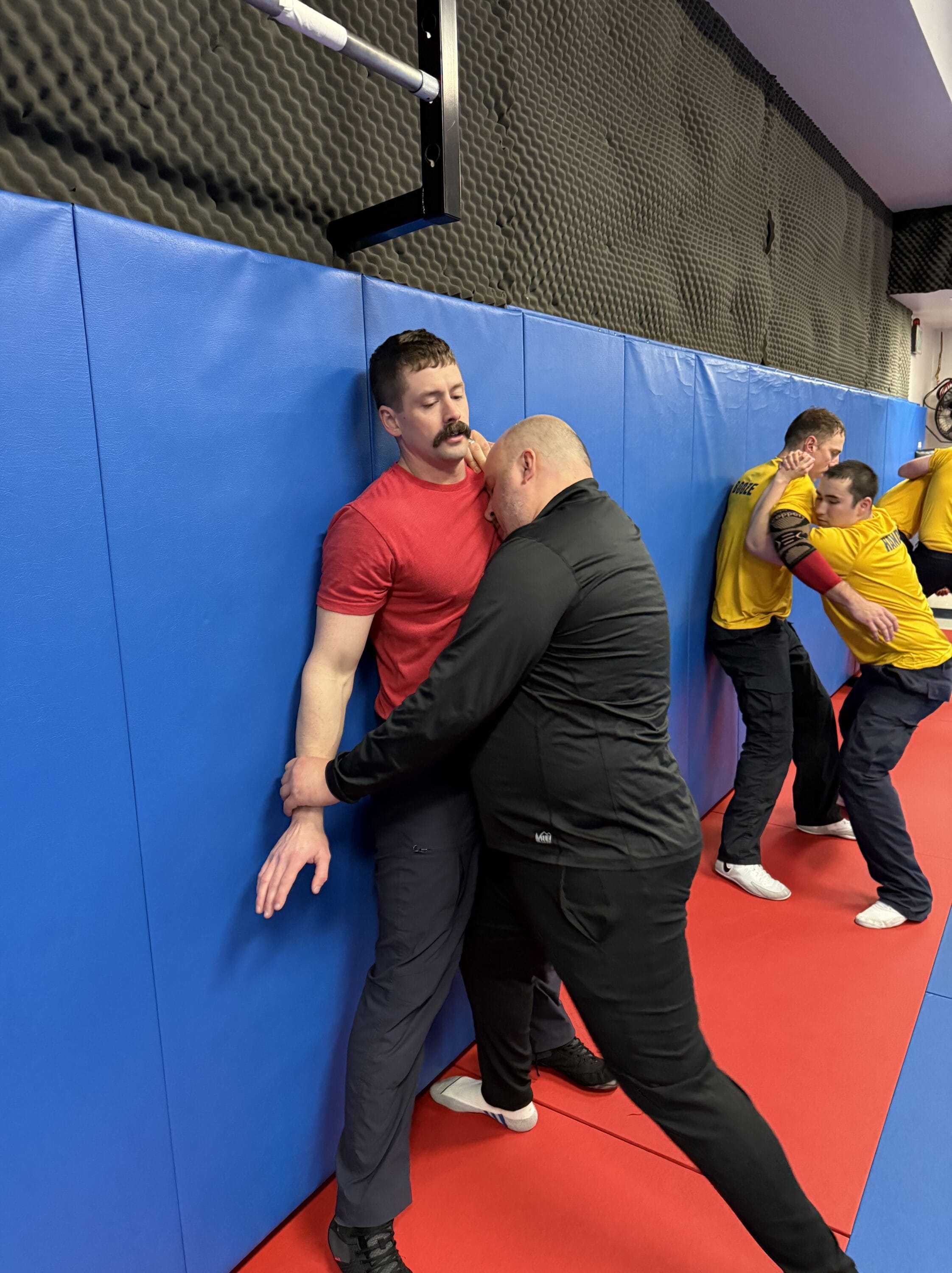
After more training and rotating in with some of the recruits, Corporal Ben Mank told the recruits they would be practicing full speed scenarios with the instructors acting as bad guys. Mank, a bald guy in his late 40s with the build of an MMA fighter, radiated quiet ‘don’t mess with me’ confidence. He looked like the kind of guy who might have a reserved parking spot at a biker bar.
All of the instructors were professional and respectful, and most were open and receptive to my visit. Mank seemed like an exception, and I got the impression he might not be thrilled about me being there. He was never rude or dismissive, but he seemed very focused on the training. Observing him instruct and interact with the recruits made it clear that he was very dedicated to his work.
I volunteered to be a bad guy for one of the recruits. I was wearing head gear, a chest protector, and gloves. The drill started with me on top of the recruit. I was told to go as hard as I could to try and hold him down and prevent him from controlling me. The recruit I was going against was a tall 21-year-old dude. As someone almost twice his age, with 30 or 40 pounds on him, I thought I had an advantage. I was wrong. After maybe ten seconds of struggle, he gained control of me and swiftly slammed me on my back. The training definitely works.

After a break and shower, it was time for dinner. I did not have much of an appetite and was tired from not getting much sleep the night before. I chatted more with the recruits and learned the different reasons why they wanted to become cops. It was hard not to think about how young most of them are. They have their whole lives ahead of them, and clearly want to devote a lot of those lives to public service.
I don’t have the exact numbers, but for all the people who initially apply to be state troopers only a small fraction make it to the academy. Talking and interacting with the recruits made it clear they were highly driven, dedicated people.
After dinner I saw some recruits practicing pulling people over. One would be in the police car and the other in the pulled over car. I observed for a while then asked if I could be the person being pulled over. They were happy to oblige. Sitting in the pulled over car seeing the police lights and spotlight on behind me gave me that sinking feeling of being pulled over.
A recruit from Nome “pulled me over” (the cars were both parked the whole time) three times for different reasons. They practiced the mechanics of stops including identifying themselves, stating the reason for the stop, asking for awareness of the reason for the stop, and asking for driver’s license, insurance, and registration.
One of the recruits was in the police car talking with me. He was 27 and former Army. He looked much younger but spoke confidently and maturely. It turns out he was a Senate page in Juneau in 2017. And he knew about the Landmine!

I saw a few troopers hanging in the lounge area. I chatted with Trooper Colten Buie, who is based in Tok. Buie, who has been a trooper for five years, gives off a gentle giant vibe. A high school football star in Texas, he played four years of college football at Southwestern Oklahoma State University as a defensive end. His college stats list him at 6’3, 295 pounds.
Buie was at the academy for two weeks as a TAC officer, which stands for training, assistance, and counseling. They are basically there to assist the recruits and help with academy functions. Former academy graduates who are still working as police officers are eligible to be TAC officers.
Buie was disarming, chatty, smart – probably the kind of cop you’d prefer to pull you over, were that necessary. But he was also formidable, which I learned first hand the next day.

I learned his family has a cabin in southern New Mexico, a three hour drive from where I grew up. I also told him one of the few speeding tickets I got in Alaska was just outside of Tok by a state trooper in 2007. I could tell by his smile he knew pretty much exactly where I was pulled over, as it’s an infamous speed trap.
Exhausted from a long day, I headed to bed around 9 pm. I was not looking forward to the 5 am PT. Even though I was tired, my nerves prevented me from falling asleep. After tossing and turning for hours, I finally fell asleep around 2 am. My alarm went off at 4:45 am.
I did not know what to expect from the PT. My biggest fear was I would not be able to keep up and have to stop. We walked into the big training room and I was told to join the recruits for their workout. We started with a brief jog around the room, followed by back-and-forth exercises like lunges, side steps, and leg lifts. I was winded but managed to keep up. It was not the Full Metal Jacket environment I feared it would be. I was told later by some of the recruits and staff that the first two weeks of the academy is far more strict and rigid.
We then went into the gym to work out. A paper with a long list of workouts was placed on the floor. These included bench press, squats, triceps, running, lat pulls, and several others. Great workout music started blasting as everyone got to it.
I started rotating in. The one that really killed me was squats. The bar had 45 pound plates on each side (135 pounds total) and I was confident in the 90 degree squats I was doing. After one set, Valcourt (mustache guy) told me to start doing real squats, which meant “ass to the floor!” I did a few sets of those the best I could. It felt good at the time, but the next day, while I was walking around the Capitol, I struggled to walk normally and not show how stiff and sore my legs were.
It did not take long watching the recruits and instructors work out to see how good of shape they were all in. At one point I observed the quiet and serious Mank with an 85-pound dumbbell. He squatted down to the ground and grabbed the heavy dumbbell on his left side with both hands, stood up straight, then extended both arms with the dumbbell above the right side of his body. He repeated this several times and then switched sides. I’m not sure I could do that one time with that much weight.
There was a 30 minute break after PT before breakfast. I took a much-needed shower and laid down for a few minutes.
I still did not have much of an appetite, but had some fruit and yoghurt to get some nourishment for what I knew would be a long day. By this point I noticed most of the recruits were comfortable with my presence and were a bit more chatty. I had only been there a day. The bonds these recruits make over the17-week academy must be extremely strong. Trooper Buie later told me the best man at his wedding was someone from his academy.
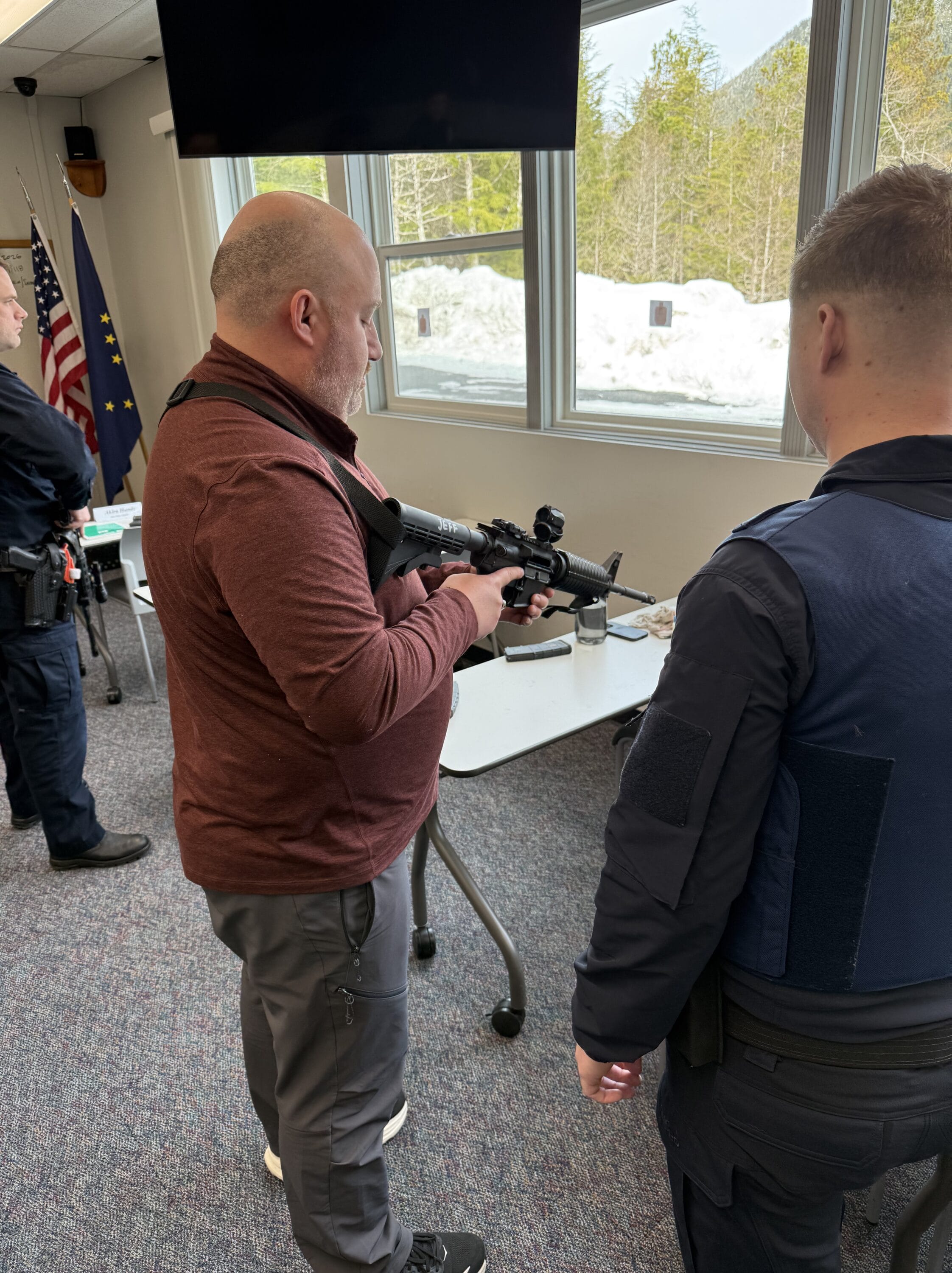
Next up was firearm training and some time at the range. I walked into a classroom with several semiautomatic riffles on a rack. The instructor was Corporal Jonnathon Stroebele. I was particularly excited for this class because I recently purchased a Ruger AR-556, which is similar to the riffles the troopers use.
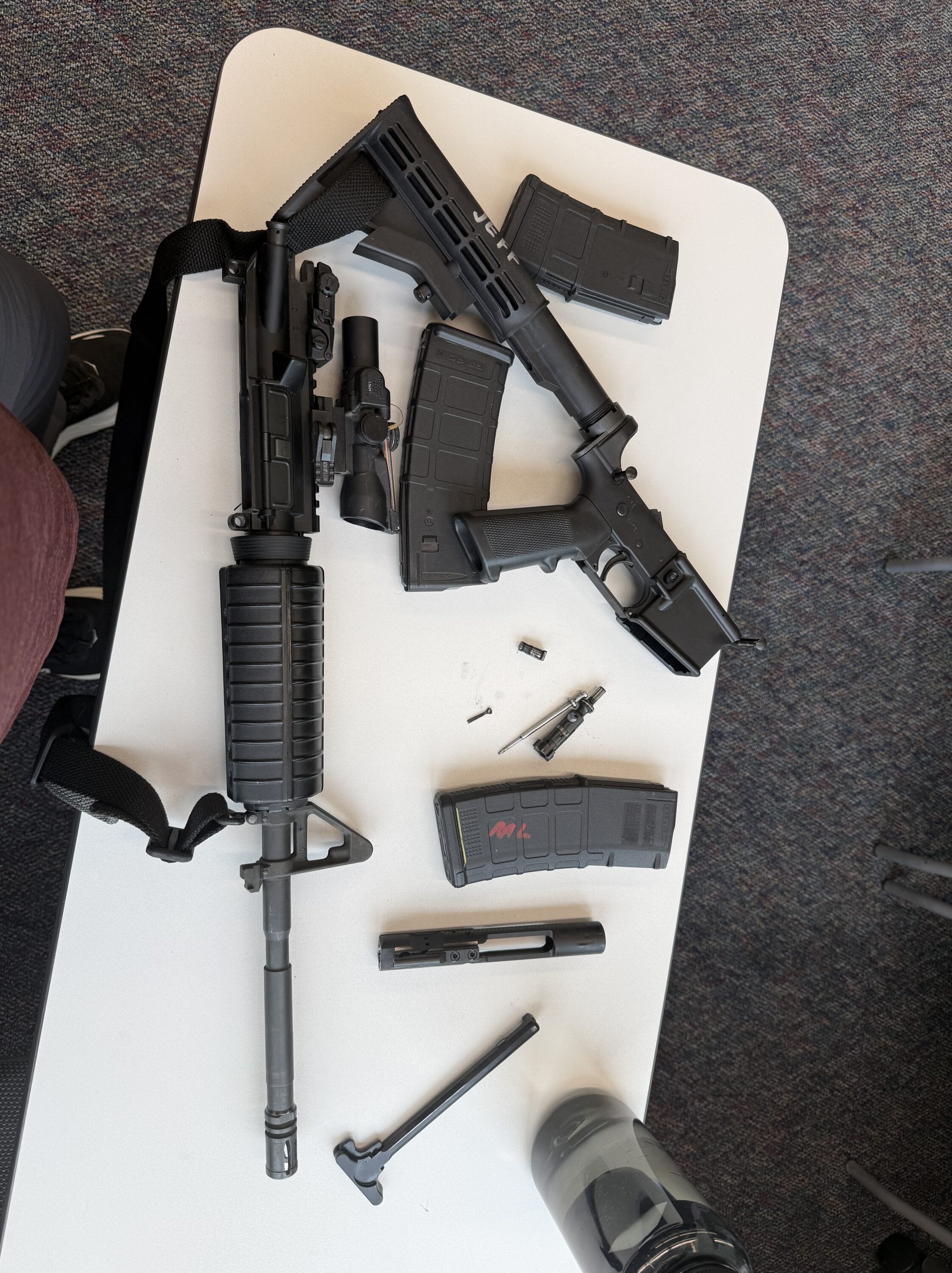
Stroebele reiterated gun safety then taught us how to identify the parts of the riffle, how to disassemble it, clean it, reassemble it, carry it, properly load and unload a magazine, use the sights, store it, and much more. This all took several hours.
Stroebele’s instructions were clear and understandable. But he also had a disarming sense of humor that made me and the recruits feel comfortable asking questions.
There were several other instructors present, including Court Services Officer Sawyer Munson. I never knew what a CSO was before I chatted with him in the dining hall. CSOs are cops and go through the academy but they basically serve the court for functions like prisoner transport, enforcing warrants, and protecting the court. Munson, like Stroebele, was a great instructor.
After classroom training we headed to the range, where the plan was for everyone to zero their riffles.
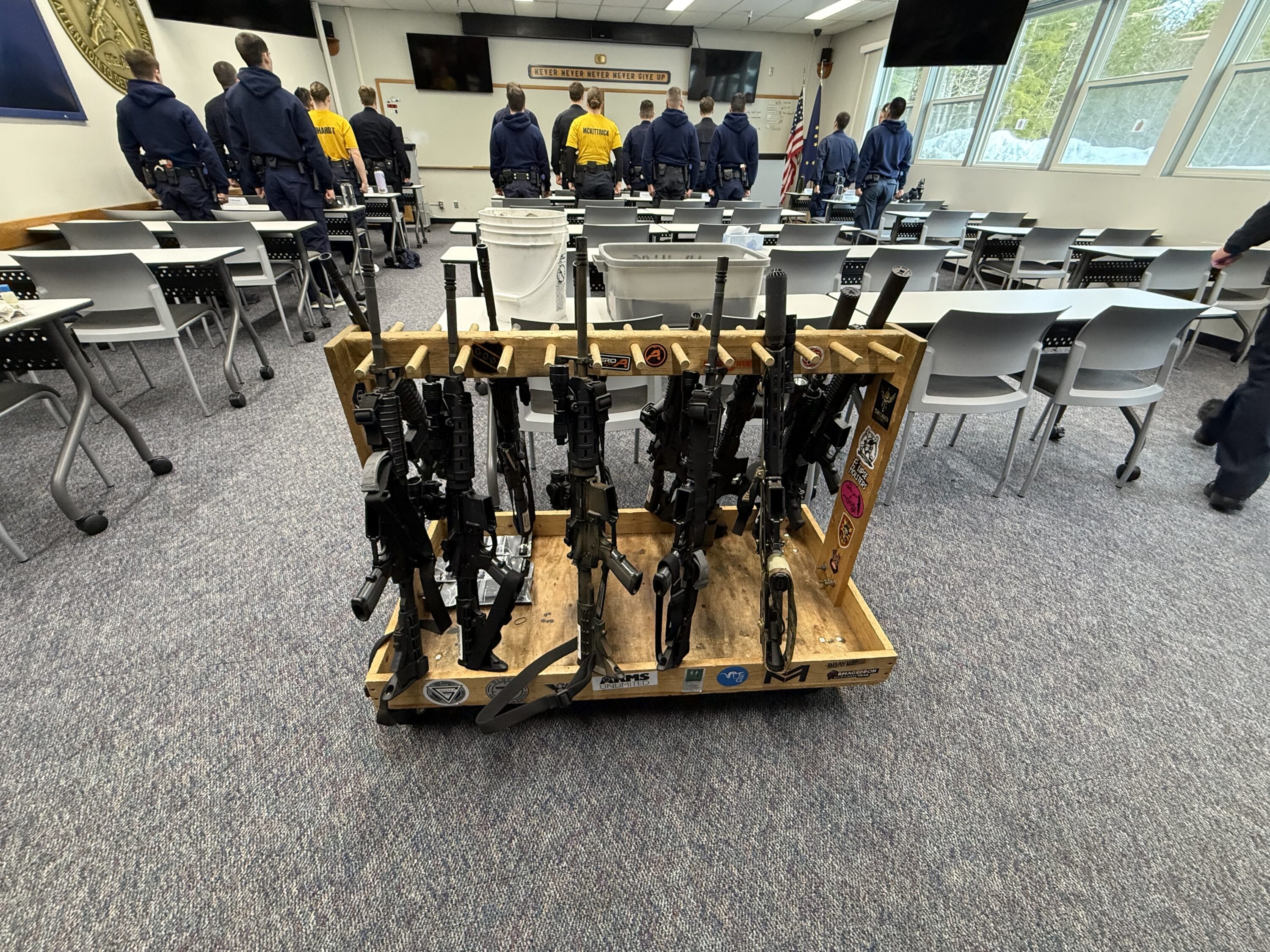
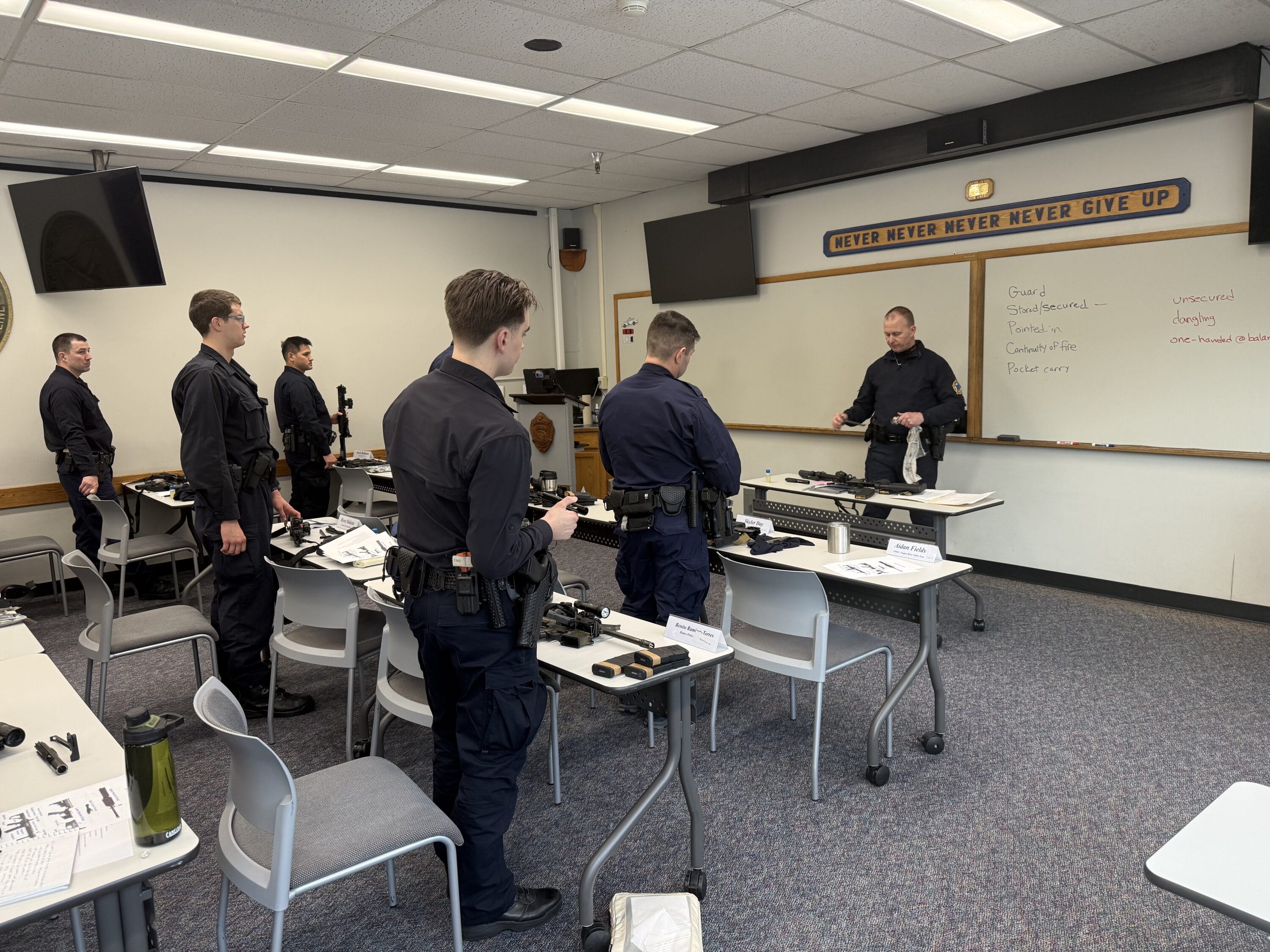
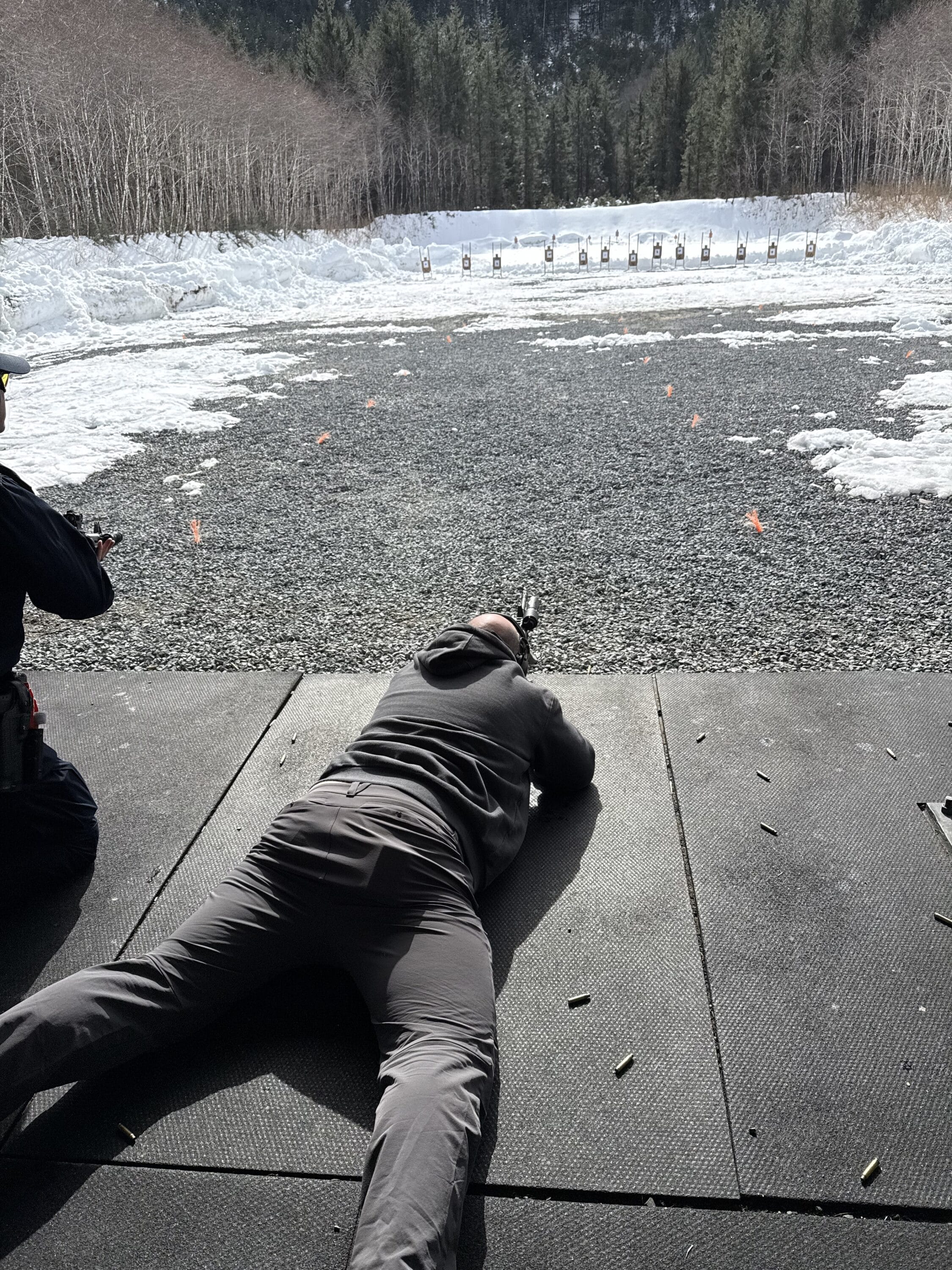
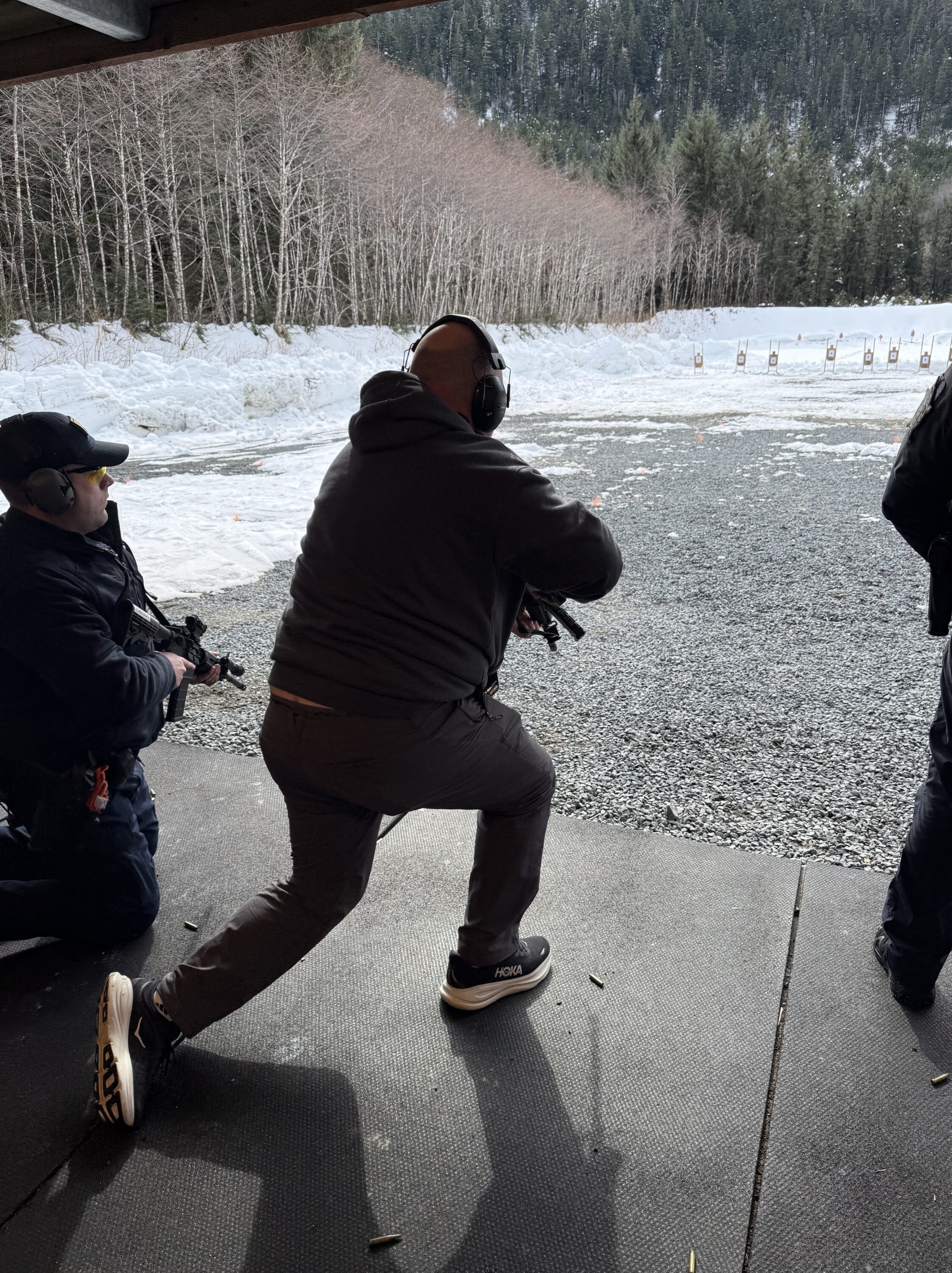
The trooper range is a fifteen minute drive outside of town. There’s a building where equipment is stored and a nice range that can accommodate dozens of recruits and instructors. There was more instruction before we started shooting. I’ve been to shooting ranges before where people acted unsafe or made me nervous. This was by far the best shooting environment I have ever been at. The instructors made everything feel extremely safe and professional. I was only nervous that I would do something stupid or not hit the target.
We then employed all of the tactics we learned in the classroom to start shooting. We started at 25 yards to test the riffles. We were instructed to take five shots. After everyone was cleared safe, we walked to inspect our targets. My grouping was decent but it was high. I started to use the math Stroebele taught us to determine how much I needed to adjust my sight down a foot. It was many clicks. But the adjuster on my sight required a tool and was extremely hard to turn. After some much needed help from the instructors, they determined the sight wasn’t working correctly and said they would get me a better one.

Lunch was some incredible sandwiches, macaroni salad, and a cookie. This was the most relaxed dining experience of my visit, and all of the recruits and instructors spoke more freely. It started to feel more like a bunch of guys at the range and less like a police academy. I thought to myself what other guys their age were up to around the state. The public places a great deal of trust on our troopers and police. It felt reassuring how committed, professional, and respectful these guys were.
After lunch we headed back to the range. With the new sight on my riffle I was in business. The targets were moved to 50 yards. We were instructed to increase from five shots to ten. After several rounds, and with the help of the instructors, I ended with a decent grouping after I got the sight dialed in. I felt great about what I was able to learn and do in just half a day of training.
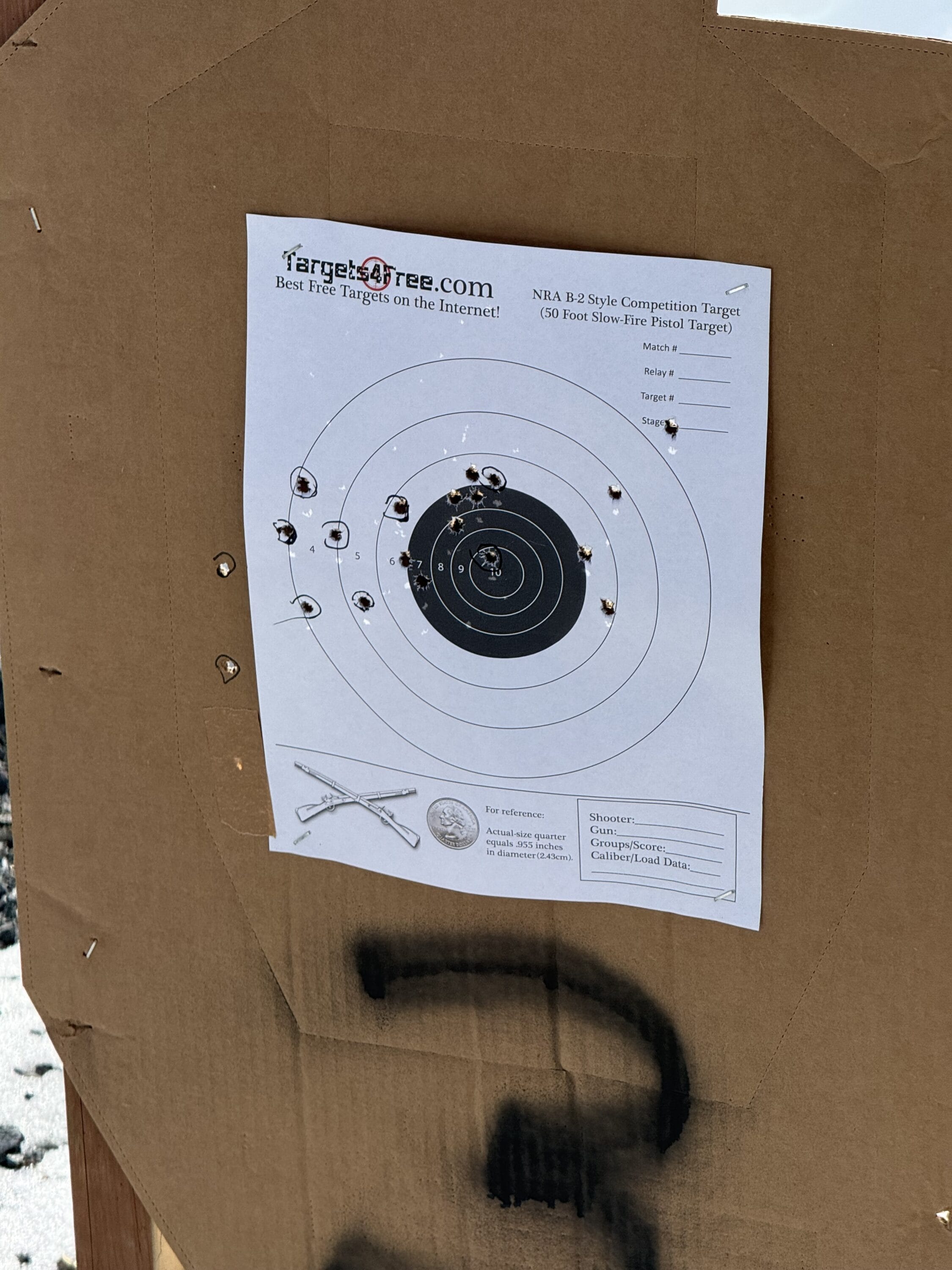
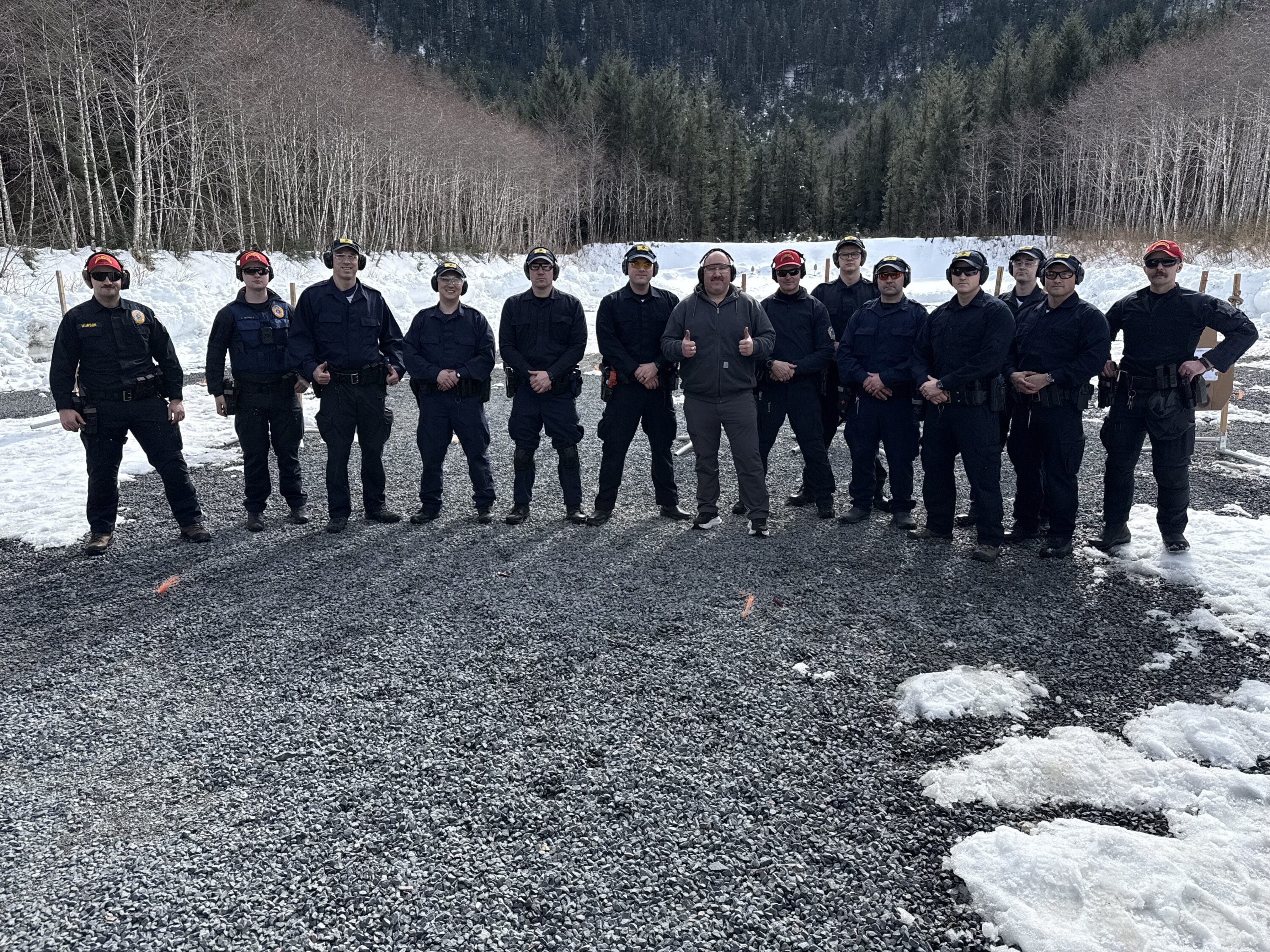
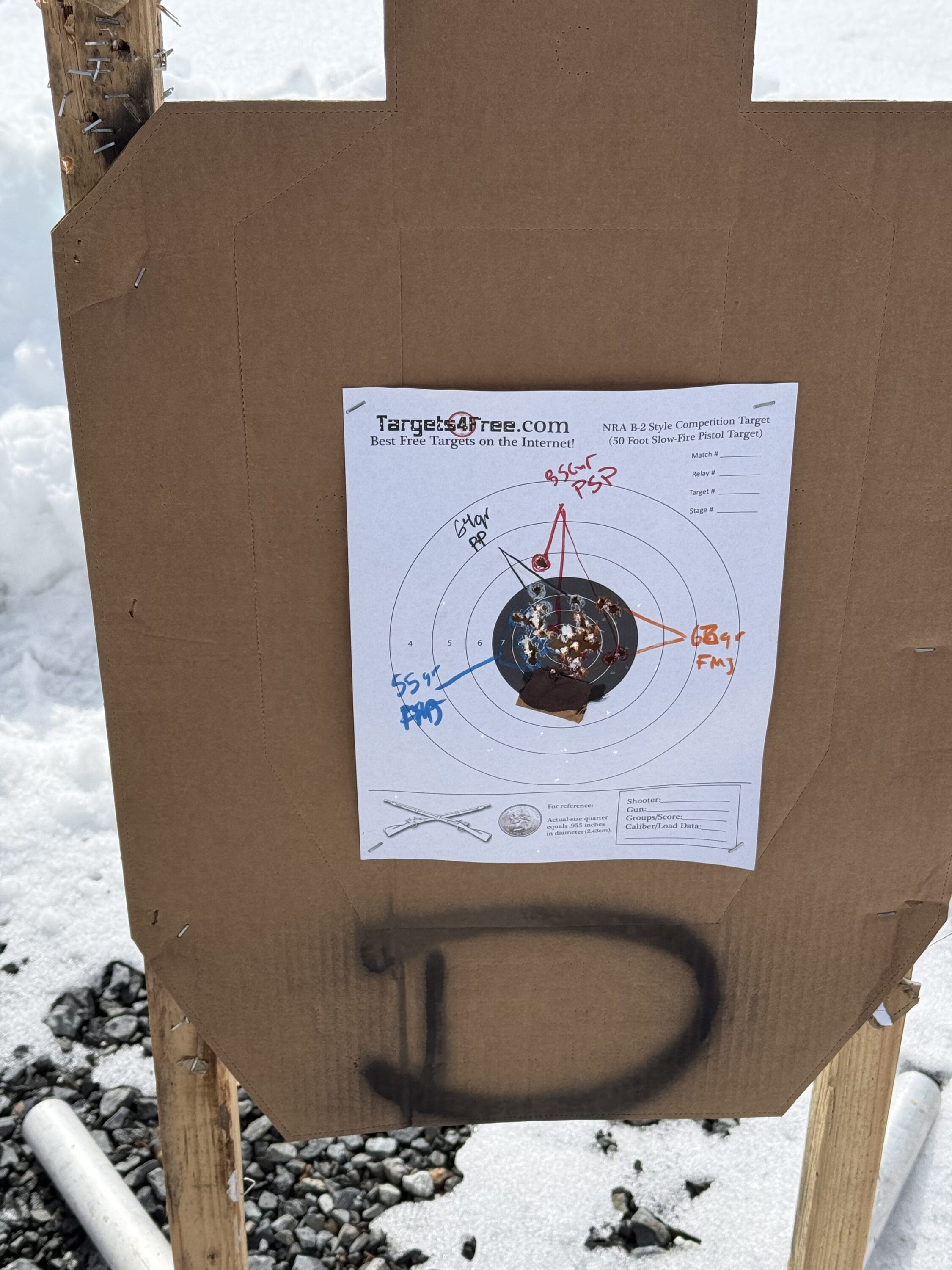
It was time for me and Austin to head back to the academy for my last round of training. We were both on the 7 pm flight back to Juneau. Before I left I got a photo with the recruits and instructors. And check out that grouping of different ammunition from one of the instructors, Corporal Coby Sutton!
Austin and I drove back to the academy. We chatted about a lot of the stuff I’d experienced as well as his role with the troopers. I have known Austin for a long time as he had been a longtime staffer. He worked in communications roles for former Governor Sean Parnell as well as Governor Mike Dunleavy (R – Alaska). Between the Parnell and Dunleavy administrations, he worked a few years as a corrections officer. He’s been with the troopers for almost five years, most of that as director of communications.
After spending two days with Austin I came to appreciate his role a lot more. I know a lot of overpaid comms people in government and the private sector who do little more than send out press releases. But in the two days I was with him I saw him take multiple calls from reporters. He played a big part in organizing and coordinating my visit. And I also learned he teaches a class at the academy about how the police should interact with and treat the media.
When we got back to the academy I had 20 minutes to relax. Then Austin came to get me. He told me to grab the police belt he had given me the day before. I waited in the rec area, curious what I was in for. I was soon joined by Sergeant Boyd Branch, the deputy commander, and Lieutenant Grant Miller, the commander. I had chatted with both of them a lot since I had arrived. I like them both and felt comfortable around them.
Boyd told me he was going to teach me how to use two of the main weapons officers carry, the gun and taser. Boyd has been a trooper since 2008. Like the other instructors I dealt with directly, Boyd was a great teacher because he was easy to understand and made me feel comfortable. His command of the protocols and how and when to use force was very clear.
I had a fake orange gun in my holster. This may sound dumb but I always thought it was easy and simple to get a gun of a cop’s holster. Turns out it is pretty complex. I practiced for a while about how to draw the pistol. Left hand to chest, hand on holster, press a lever, move a guard, press down. It’s not easy even when doing it slowly. After some practice, I was able to get it out and put it back, albeit not as quickly as someone who is properly trained.
He then taught me that when you draw a pistol, you always point it toward the ground at first if you are not ready to shoot. This is to prevent accidentally shooting someone. You only point the gun at a person when you are shooting.
He then showed me a different pistol that was blue. This uses simunition, non-lethal rounds to train with a pistol. After Boyd explained it to me and took a few shots against the wall, he let me do the same. While non-lethal, this stuff would definitely leave a mark.
He then showed me how to use a taser. For training they use a decommissioned taser that still has the two lasers that guide the prongs and makes that unnerving taser sound. We talked about when it is appropriate to use a taser and when it is appropriate to use a gun.
While effective to subdue people non-lethally, tasers sometimes don’t work because the prongs don’t make a connection or the suspect has thick clothing. Studies and analyses vary, but the research indicates that tasers work about 60% when deployed in real-world scenarios. The good news is sometimes just the sight of a taser being pulled out is enough to make a person compliant.
After my training with Boyd, I was told I would be performing some simulated scenarios. Wearing my paintball mask and neck cover, I walked to room 258. As soon as the door opened the attack happened. I have been re-running it in my head ever since it happened.
Remember Trooper Buie? He was the huge guy that attacked me. I had no idea who was in the room when I knocked on the door.
I’d been completely taken aback by how fast everything had happened. Boyd pointed out my first big mistake was standing in front of the door. Standing to the side of the door while knocking gives the officer a little extra time to deal with a charging person. In that situation, an extra second could mean life or death.

One thing I could not stop thinking about was how many times I have watched videos of officer involved shootings and judged what happened. I recalled several instances where I watched a video 20 or 30 or 40 times from my office and then, after having every bit of information, developed an opinion on what the officer should have done. Or the times I have asked police officers things like, “If a suspect is coming at you with a knife, why can’t you just grab it or shoot it away or tase the suspect?” I feel dumb now having asked those questions.
After our discussion, Boyd showed me what he would have done in that scenario. Keep in mind he knew what was coming. He stood at the side of the door and knocked. When Buie came out attacking, Boyd quickly stepped back to make space, drew his gun, and shot several rounds of simunition into Buie’s protective vest. It lasted seconds and felt real.
I did two more scenarios. Both involved calls for a person with a warrant. I was still jacked from the first simulation. My nerves had calmed down maybe 15% from before the first time.
I walked up to the door, stood to the side of it this time, knocked, and announced I was the police. Buie opened the door. I told him I was there about a warrant. He backed up and with both hands in his pockets said, “I’m not going back to jail!” The way he said it was so realistic it’s hard to put into words. I commanded him to take his hands out of his pockets. He argued with me. My heart started pumping again. I told him again to take his hands out of his pockets. He then instantly drew a phone from his pocket. I ran backwards into the hallway as he came at me, drew my gun, and screamed at him to get on the ground. I felt relieved all he had was a phone. When he saw my gun, he complied and got on the ground.
After it was over, Buie showed me he had a gun in his other pocket. He just as easily could have pulled that out. When Boyd showed me how he would have done it, he immediately ran into the room and took charge of Buie. He pointed out to me that Buie could have easily closed and locked the door when I ran into the hallway.
The last scenario was a repeat of the first. This time, I stood to the side of the door, knocked, and announced I am the police. Buie opened the door. I said I was there about a warrant. He got jumpy and moved back, telling me he wanted some coffee. I followed him into the room and told him several times to stop moving. I was more nervous this time as I was in the room and knew I could not easily retreat. He kept walking towards a small refrigerator with a coffee pot on top of it. Then I suddenly noticed a blue gun with the simunition on the refrigerator. I yelled at him to not touch it. I started to get really scared that he was going to shoot me. He put his hand on the gun. I drew my pistol and yelled at him to take his hand off the gun. The seconds felt like hours as I waited to see what he was going to do. He finally took his hand off the gun and complied.
I chatted with Boyd, Miller, Buie, and Austin for a while about what I had experienced and what cops have to experience everyday. One big takeaway I’ve never considered is that when a bad guy or unwell person decides in their head they are going to attack a cop, they know it but the cop doesn’t. The cop is acting with limited information, and never knows what a suspect will do. Seconds can mean life or death.
Unlike police departments in big cities like Anchorage, when a trooper is dispatched they are almost always alone. Backup is often hours or sometimes even days away.
Another takeaway was the role that the internet and social media plays in all of this. We have all seen the comments on articles or videos about an officer involved shooting. When politicians, public figures, or just regular people get attacked online, they are free to engage and respond if they choose. Cops aren’t allowed to do that. Even if what is being said is wrong or inaccurate, they are not allowed to say a word back. Imagine how maddening that must be. It’s easy to tell someone to not read the comments. It’s a lot harder for a person being attacked to ignore them.
Cops are not infallible and should be held to the highest standard as we entrust them to protect us and use force when needed. But judging them, like I have done many times, with zero knowledge of what they actually experienced or how fast things happen, is extremely hard to do well. And mob justice is certainly not the way.
Society would be better off if lawmakers and reporters who cover crime experienced what I did for two days in Sitka. I was told back in the 90s and into the mid-2000s, more than 2,500 people applied every year to be a state trooper. That number is now down to the hundreds per year. The academy I was at had 18 recruits. It’s been as high as almost 50 in the past.
A lot of young people don’t want to be cops anymore, and who can blame them. But we need cops. The best feeling in a dangerous situation is calling 911 and having the police show up quickly. The worst feeling is calling and having no idea how long you’ll need to wait for help – or whether anyone will show up at all.
Dude, I’d LOVE to tase you. I’d sell tickets. Lots of folks would want to watch.
Thank you for this article, it is hard to understand what police officers go thru everyday- you have shown a glimpse of the complexities, the impossible decisions officers are faced with daily.
Great job Jeff. Alaska has the highest standards for our Public Safety Officers- training in Alaska is the “Harvard” of Academy’s.
Thank you to all the Public Safety Officers serving.
Jeff, great article. Very informative and illuminating….
What strikes me most is how quickly the situation escalates. One second there’s structure—training, instructions, a clear role—and the next it’s chaos. I think about how I tend to expect myself to react perfectly under pressure, but in reality, everything becomes instinctive and messy. It reminds me of playing EaglerCraft Game, where I might have a plan going in, but the moment something unexpected happens, I’m forced to react on the fly. The difference, of course, is that this scenario carries emotional weight and consequences that go far beyond a game.